 |
|
FESTIVAL FRENZY IN BRAZIL: CARNAVAL 2026 |
|||
Story and photographs by Katrina Chen |
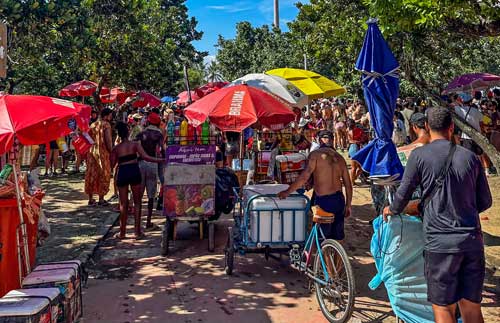
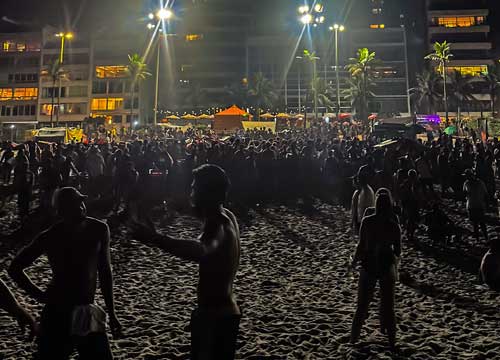
Brazil is one of those countries that reinvigorates life. Colors are more vibrant, music more melodic, and dancing more passionate. Walk down a street, and you’ll hear the catchiest beats that just make you want to burst into a dance routine on the street. The combination of the beautiful Amazonian forests, bustling cities, and tranquil beaches makes it a dream destination. But one week in particular earns Brazil the award for the most visited tourist attraction: Carnaval. Carnaval is a festival celebrated annually for one week throughout the entire country. Every person of every age, every street, even Brazilians in other countries, will celebrate Carnaval. It is a week of indulgence and celebration before Lent, when people will abstain and fast. People dress up in fun outfits with copious amounts of glitter, colors and fans. They hit the streets heading to blocos, which are street parties. These blocos consist of drummers beating out a rhythm, vendors wheeling coolers of beverages and carts of meat skewers, and hundreds of thousands of people dancing throughout the streets. Rio de Janeiro usually sees 7 to 8 million people for Carnaval. It becomes impossible to move, but that's where the fun and connections can best be made, shoulder to shoulder.
My first time hearing about Carnaval was from the movie Rio. When I decided I would be starting my backpacking trip through South America with Carnaval in Brazil, I didn't look up any information about it. Instead, I booked my ticket and decided just to immerse myself. All my context for Carnaval was from the movie Rio, and I wanted it to stay that way so the reality would be beyond my dreams. The only thing I had going there was a ticket to the Sambadrome. The Sambadrome, I knew, was where the big parade with giant flashy floats took place, and this was what I thought the entirety of Carnaval was. I also thought the flashiest float was the one to win. It's so much more than that.
My first day in Brazil (three days later than originally planned because I forgot to get my visa to enter the country) was the first day Carnaval started. After the forgotten visa mistake and also after missing my second flight, by the time I landed in Rio de Janeiro, I was not in a festive mood. I took an Uber to my hostel, 45 minutes from the city, and slept for the entirety of the first day because I needed a hard reset. The next day, bright and early, I headed out to see just what Carnaval looked like. As soon as
I saw my first bloco, I knew I was underprepared for the festivities: hundreds of people clacking
fans in swimsuits,
Carefree smiles beamed on every single face. I couldn’t stop myself from joining in. After befriending some Brazilian locals, I ended up in the heart of those blocos. I was gifted costumes and gallons of glitter that I now still find in my bags. From 7 am until 10 pm, I was out dancing in the streets and on the beaches. Not even the humid, pee-scented air and sweltering sun stopped me from indulging in the time of my life.
My wildest experience with the blocos happened when I was attempting to leave for some peace. I had ordered an Uber Moto, which in itself is a life-altering experience. If you’ve never had the pleasure of riding a moto in Rio de Janeiro, the only thing you're missing is coming to terms with your frail mortality by the end of the ride. That is if you survive. It does offer a cheaper and faster option than a car when you need to go long distances. Alas, my death ride came, and I happily climbed on in nothing but a swimsuit as I was headed to the beach. I had been in the blocos for 6 hours already and needed some calm. The ride, which was meant to be 15 minutes, took 45 because we became the spectacle of a bloco. The blocos typically start on a specific street, and every 20 minutes or so,
everyone collectively moves blocks. As my moto drove down a ramp towards an
underpass, which then led to a tunnel, we merged into a moving bloco. I later
discovered this bloco, called Boi Tolo, broke the record for bloco attendance in all of Rio
de Janeiro Carnaval history. Once I was uncomfortably in the center of the bloco and
my driver was revving his engine to get people’s attention, I became the focus of the
many phone cameras. Kind strangers informed me that what my driver was doing was
incredibly illegal. I could do nothing but smile and apologize. I wasn't the one driving the
moto! An hour later, I was finally decompressing on the beach, but not for long. A girl
approached me to inform me she had seen a video of me on Instagram and how
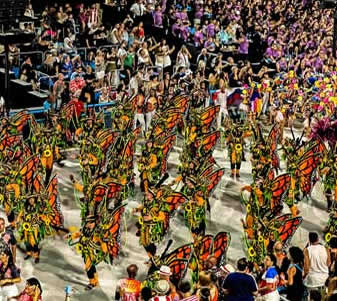
The one experience I had gone for specifically, Sambadrome, definitely lived up to my uninformed expectations. It delivered in its flashy floats, but there were so many more aspects I was completely uneducated about. Let me break down what the Sambadrome is and what it holds.
The Sambadrome is the name of the stadium that was created specifically to host the parade. The parade itself is a competition between Samba schools in Brazil. There is always an Access Group that competes to gain a spot in the Special Group the next year. The Special Group, the pinnacle, competes for the title of the best Samba school in Brazil. They are judged on so much more than just their floats. There are about 40 live judges distributed in booths along the 700-meter roadway. Each school has thousands of performers with different roles, and they must perform for 60-90 minutes.
The judges award a score, one to 10 in various categories like costumes, floats, dancing, drummers and theme. The craziest aspect to me was that they sing the same song for the entire performance. Sometimes it's just one guy singing the same 5-minute song repeatedly for an hour or more. That blew my mind. Each night, a different number of schools perform; my night had eight. Even when it was 4 am, and the sun was rising whilst my eyes were setting, I couldn't tear myself away from it because the spectacles were simply spectacular.
Though the Carnaval festivities were the highlight of my time in Rio de Janeiro, I did take the time to do some typical tourist activities, which also make Brazil a worthy travel destination. One of these was Sugarloaf Mountain. This is a beautiful mountain that juts out into the sea, and at the top is a picturesque view of the city. There are a couple of ways to go up: the cable car all the way is one option, or you can hike halfway up, then take the cable car to the top. If you like extreme sports, you can climb all the way up, but you need a guide and ropes, as it's a technical climb. Once at the top, there are restaurants, gift shops, bars, bathrooms, coffee shops, and many other places to hang out. There are some small hikes in the jungle-like biome, and I would recommend going at sunset. You get a gorgeous view of the sun setting behind the mountains and backlighting the iconic wonder of the world: Christ the Redeemer.
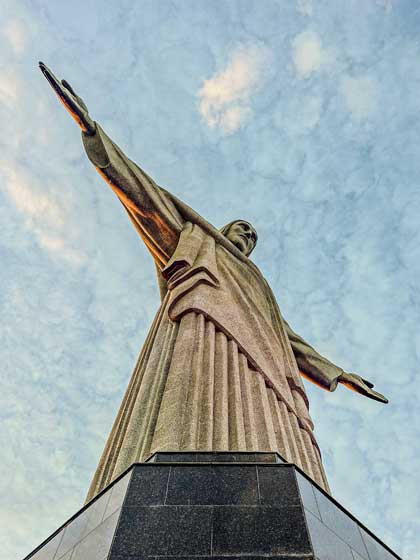
Christ the Redeemer was one of the other tourist spots I visited. To be honest, I found
Sugarloaf a better use of time and money, but it was still a cool experience. I only say
this because the entire experience is maybe 30 minutes. I took the train up, which was one of the best parts, going through the canopies of trees. At the end of the train, I
ascended a good number of steps, which offered worthy views of parts of the city before
The statue of Christ was revealed in all its glory. It’s actually much smaller up close than I had
The week I spent in Brazil was the perfect first experience of South America for me. I travel because I yearn to experience cultures from every part of the world, South America being one I hadn't had the chance to yet immerse myself in. Even though Carnaval is one of the most visited tourist attractions, through this festival, I still got to experience an important part of the Brazilian culture. The majority of participants in Carnaval are Brazilians; international tourists make up only 2% of revellers. Brazil has so much more to offer, I hope to return one day and visit the remaining regions. But even having visited only one part of it, after spending a week participating in Carnaval with Brazilian friends, I concur that they have perfected the art of celebrating life to the fullest. About the Author
|