 |
|
A BRIEF BOLIVIAN ESCAPADE |
|||
Story and photos by Katrina Chen |
When my last month in South America came around, I thought I had saved the best country for last. But Bolivia had other plans for me. For many reasons, Bolivia had been voted a favorite country by the fellow travelers I met along the way: rich culture, beautiful landscapes, vivacious cities, and a very good dollar exchange. It hosts iconic landmarks known worldwide such as La Paz, the highest capital city in the world at 11,975 feet and Lake Titicaca, the highest navigable lake in the world at 12,507 feet. Bolivia's most famous attraction is the Salar de Uyuni, at an elevation of 11, 995 feet, the world's largest salt flat, spanning about 6,214 square miles. The salt flat originates from a prehistoric lake that dried and left behind this magnificent landscape. The salt flats and Lake Titicaca were once one body of water before the land shifted and turned them into two dichotomous landmarks. I chose the Salar de Uyuni tour to start my Bolivian expedition.
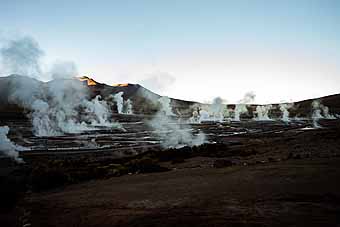
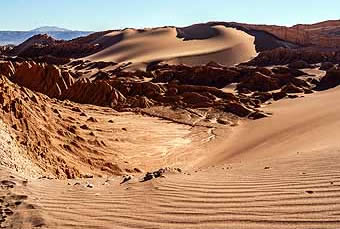
The tour starts in San Pedro de Atacama, Chile. This desert city in Northeast Chile sits at 1.5 miles elevation, making it the perfect place to acclimate before entering Bolivia. It is highly recommended that travelers adjust to the altitude for at least three days in this city before entering Bolivia, as the three-day tour to Salar de Uyuni reaches up to 12,507 feet above sea level, and altitude sickness can begin at 8,000 feet. Unfortunately for me, I had only a two-day cushion, so I stocked up on coca leaves - a natural altitude sickness remedy - and hoped I was blessed with the luck of immunity to altitude sickness. During those two days in San Pedro de Atacama, I tried to push myself hard to help with acclimation by hiking around sand dunes and valleys and visiting geysers at 13,200 feet. With only a slight headache at the end of the day, I felt the immunity odds were in my favor.
The first day of the tour saw me up long before sunrise. A van picked me up alongside nine other tourists, and we drove straight to the Chile-Bolivia border. Every tour company wants to be first at the border for a faster crossing, so although the border didn’t open until 7 a.m., we arrived at 4 a.m. The van was shut off to save gas, but that meant we sat, teeth chattering, in 17-degree Fahrenheit weather for three hours. No number of layers could have prepared me for how cold it was, and having no gloves or beanie didn't help. But eventually the little rays of warmth and light came over the horizon, and we hopped out of the van for a mediocre breakfast before heading across the border. That's when I met my newfound family for the next three days of the tour: Anja and Timm from Germany, Charles and Arnauld from France. We crossed the border with no problems and no wait, then met our driver, Adolfo, and his Jeep.
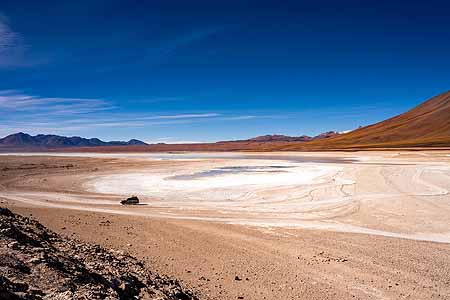
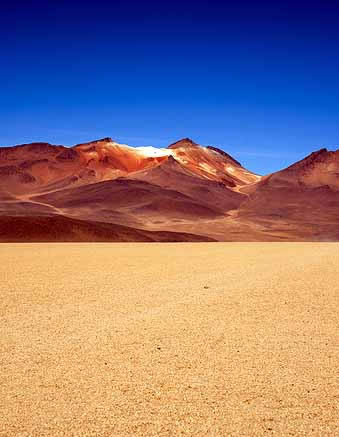
No roads, no speed limits, no seatbelts. We drove wherever we wanted, flying through ever-changing landscapes. We went from desert dunes to mineral lakes to steaming volcanoes.
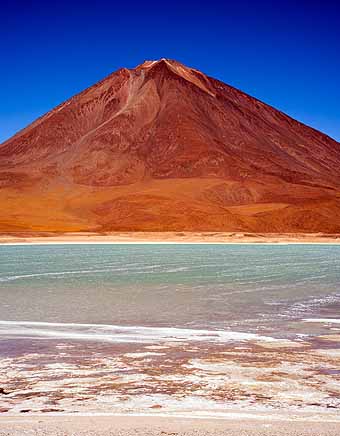
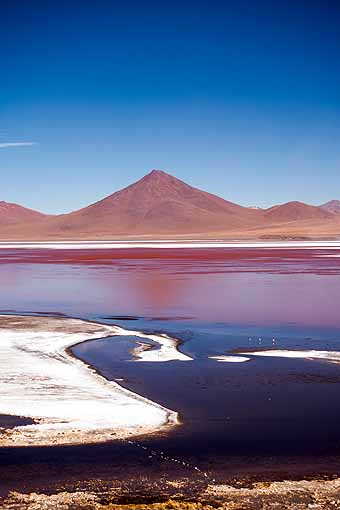
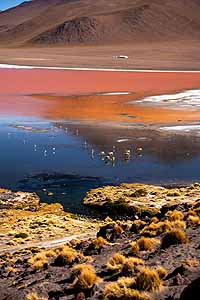
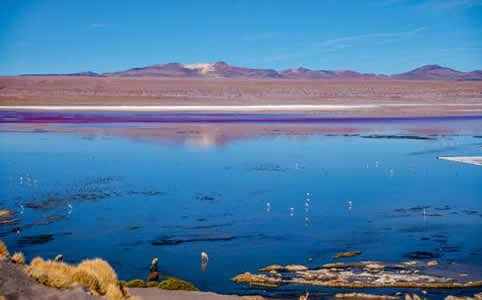
We visited naturally regulated hot springs and spouting geysers. No one could predict what lay over the next hill. The most beautiful sight of the day was a lake that, thanks to special minerals, was both blue and red, creating a striking contrast.
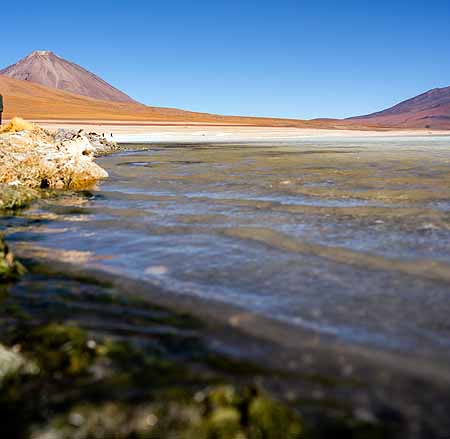
All the while, we kept climbing in elevation until we reached a peak of 15,840 feet. Even at that elevation, wildlife thrived. Flamingos stood proudly in the lagoons, and vicuñas, a relative of alpacas and llamas, grazed on the shrubs. We arrived at our accommodation just as dusk faded into darkness. This was when things started to go downhill for me.
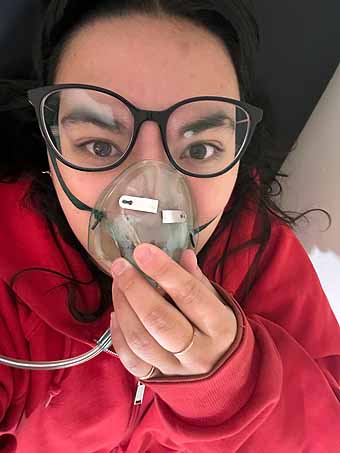
I had been sporting quite a headache all afternoon. I had depleted my entire stock of coca leaves, and even the ibuprofen I had taken wasn't easing the pain. I knew it was probably altitude-related, since headaches are a common symptom, but I figured I could sleep it off. However, the accommodation that first night sat at 13,200 feet, and it was below freezing temperatures. Terrible sleeping conditions. What I needed was a nice, warm meal to lift my spirits, but as I sat down at the dinner table and looked at the food, nausea settled deep in my stomach. I managed to get one bowl of soup down before I had to bid my new friends goodnight. I couldn’t focus on anything but the pounding in my head. It was as if I had locked someone inside my head against their will, and they were taking a sledgehammer to my skull in an attempt to break free. I answered the call from my bed, then bundled up in three blankets and three sweaters. Sleep finally triumphed over the attempted prison break happening behind my closed eyes. I told myself tomorrow would be better; I just needed a good night's sleep. I was wrong. I woke up at 4 a.m., confused about how I had ended up in a sauna after falling asleep in my freezing Bolivian hostel room. Only it wasn't a sauna; it was a fever, and the six layers I had on were milking every ounce of water out of my entire body. I rolled over from my side onto my back to start peeling off layers, but the simple move felt like falling off the monkey bars straight onto my back. Whoosh, all the air from my lungs, gone. Suddenly I wasn’t able to breathe, and now it wasn't my head making a breakout attempt, but my heart trying to beat out of my chest. Every time I went to take a breath, it felt as if the air was airless. I could feel it going into my lungs, but it wasn’t satiating them like normal. As I grabbed my phone with shaky fingers to turn on my flashlight, I realized those fingers were blue. I quickly opened my camera, and yup, my lips were as blue as a Smurf's. This was when I started to freak out, which wasn't the most logical response when I was already cyanotic and tachycardic. But I was completely alone in my room, and it was 4 a.m. I put my fingers to my wrist to measure my heart rate, a skill learned in high school gym that I could finally apply to the real world! 155 beats per minute. Lying down. Not great! To make matters worse, with every deep breath I attempted to take, I began to hear a crackling sound in my lungs. As one does in any critical situation like this, I went online for a solution. This resulted in finding out I had symptoms of HAPE: High-Altitude Pulmonary Edema. A highly concerning, borderline life-threatening condition in which fluid enters your lungs. Queue more hyperventilating. I had to think logically and calm down; freaking out only made my situation worse. But in this tiny Bolivian town in the mountains, there was no hospital. Plus, we'd used our one oxygen canister that evening. At that point, I could do nothing but wait until morning, when my guide would be awake. I attempted to sleep, but with a racing heart and inability to breathe properly, this proved impossible. I stared at the ceiling and told myself I was okay for three more hours. Finally, at 7 a.m., the rest of the group had woken up, and we met at the breakfast table. This involved climbing a flight of stairs, and I had all but collapsed into my chair by the end. Luckily, my friend Timm had a pulse oximeter from his altitude sickness stint in Cusco. After placing bets on what my oxygen would be at - a normal level is 95 to 100%, and anything lower than 90% is critical - no one had even come close to accurate. My oxygen was at 55%. We loaded me into the back of the Jeep right away and sped off to the clinic in this tiny rural Bolivian town. But it was a Sunday; everything in South America is closed on Sundays, even the only health clinic in town. We called the emergency number on the door for the on-call doctor, but he was an hour away. Thankfully, my group were the kindest people ever, and they had no issue delaying our day by an hour so I could live to see another day. The doctor took my vitals and said, “Yeah, that’s not great,” which everyone loves to hear from their doctor. He hooked me up to oxygen for thirty minutes and gave me altitude medication plus some other pills for the fluid in my lungs, which he didn’t sound that concerned about. That day of the tour, we were descending to about 12,672 feet, so he sent me on my way stocked up with meds and a warning to take it slow.
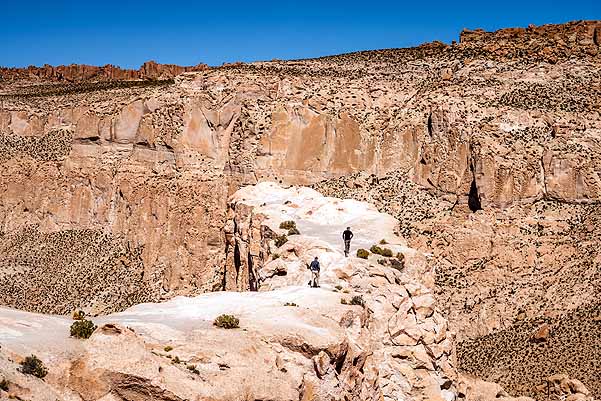
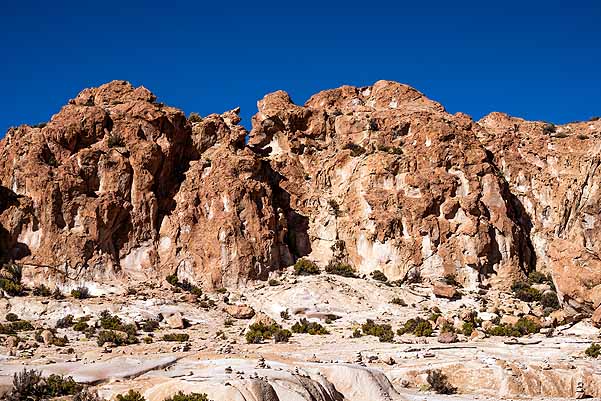
The tour went on as normal; I felt leagues better after having taken the medication, despite my momentary concern when my extremities went numb right after taking it—a common side effect. I couldn’t do too much walking without feeling winded, so I kept my exploration of the sights like a lost city of rock and an anaconda canyon to a minimum.
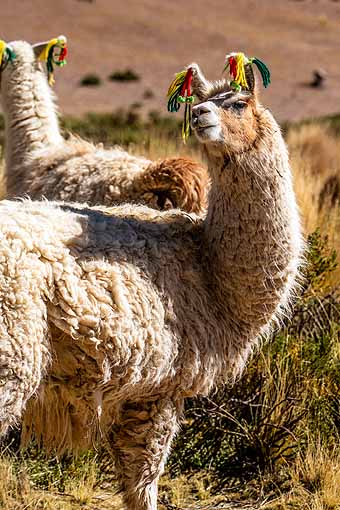
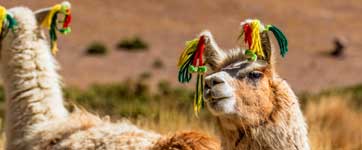
I did get up close and personal with some llamas flaunting colorful accessories in their ears.
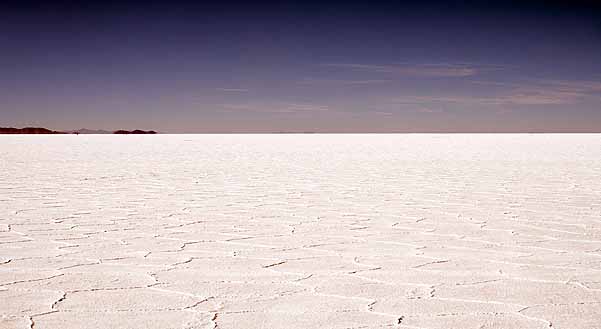
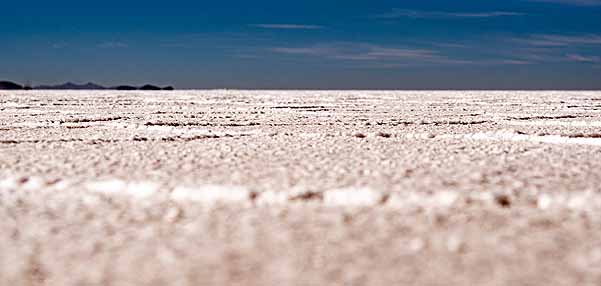
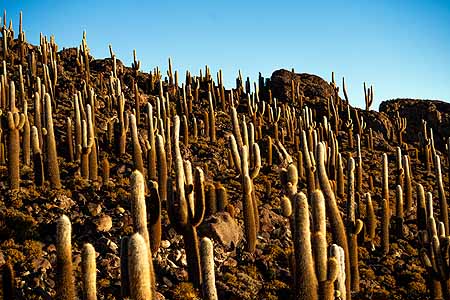
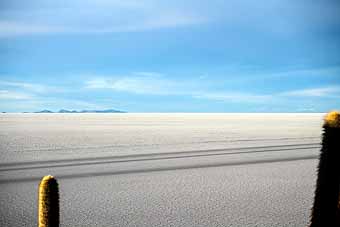
But playing it safe was the right idea because, as our tires hit the radiant white of the salt flats, I was in good spirits. I hadn’t looked up pictures of the salt flats before going because I wanted to experience it blindly, and it was truly unique. I don’t think any landscape could measure up. It was endless white for as far as the eye could see. We drove to Isla Incahuasi, a rocky hill spotted with giant cacti, some reaching up to 33 feet and 1,200 years old.
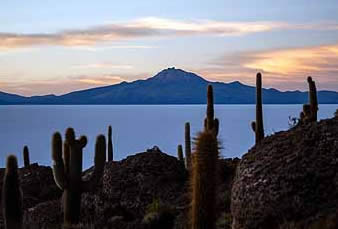
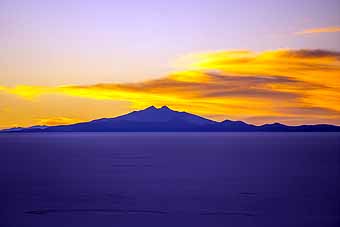
We had free rein over this island as the sky began to imitate a well-used painter's palette. I wanted to reach the top of this cactus island for a panoramic view, and after an agonizingly slow hike up, the view was worth the constant pain in my chest and the swimming stars in my eyes.
White salt flats stretched into the distance in every direction, only interrupted by colossal Andean mountains. I couldn't have painted a better background; the sky had dreamy pastel orange highlights that enhanced the blues in the mountains and salt flats. It looked like something out of a dream, and was the best way to end the day.
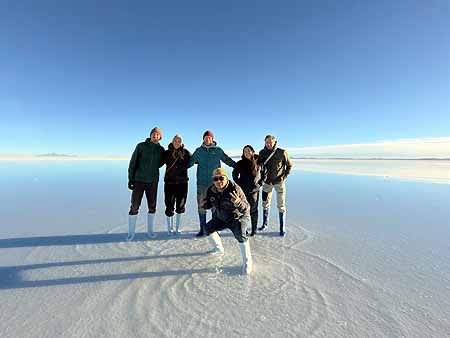
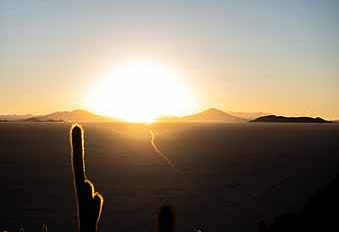
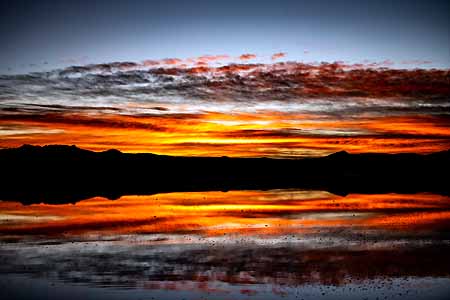
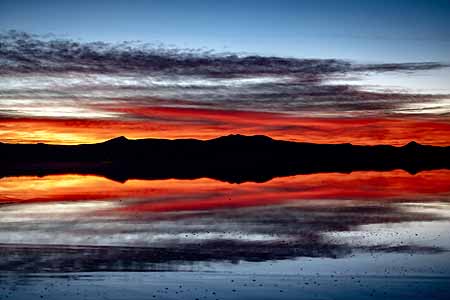
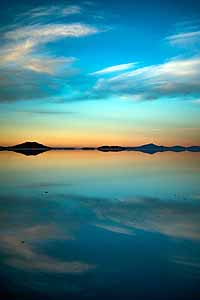
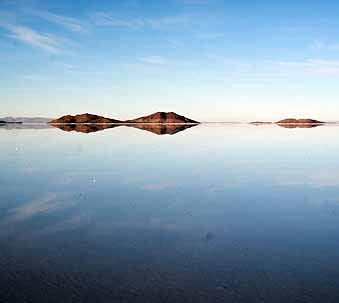
That night we slept in a literal salt hotel; I do not recommend licking the walls, furniture, or floor, as tempting as it may be. Our last day started the same as the first, long before the sky lightened. We set out driving across the white salt expanse until we reached our sunrise destination. During the wet season, the salt flats fill with rainwater, creating a beautiful mirror effect. But since I visited in the dry season, only one area of the salt flats could still produce this phenomenon. We had rented some rubber boots so we could wade out into the water, but that didn’t stop the cold from nipping my toes. Note to self: next time, wear at least six socks. But it was so worth the frozen feet, because as the sun came up and the sky revealed a medley of orange, red, and yellow that mirrored on the ground as well, it proved to be a transcendent moment.
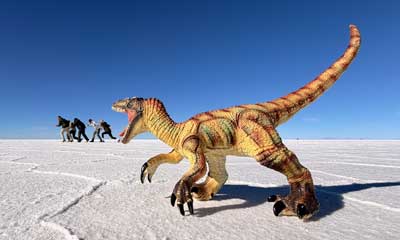
We spent some time fooling around on these salt flats, which offered the opportunity for some great pictures. I felt like a kid on a playground again, dancing around with no thoughts in my head and playing pretend while we ran from dinosaurs.
After we wrapped up our salt flat expedition, we headed into the town of Uyuni, where our tour ended. This is where we were meant to say goodbye, as my new family, with whom I'd spent the last three days, were going their separate ways. I had plans to go in a semi-circle around Bolivia, hitting four or five cities before entering the capital - La Paz. The German couple would spend a few days in Uyuni before continuing, and the French brothers would head directly to La Paz. But as always with traveling, plans tend to get changed whether you want them to or not. We were informed upon entering Uyuni that there were no buses - the main means of transport in Bolivia - leaving from Uyuni. Bolivia was in a state of political and economic unrest; protestors had filled the streets with rocks and sharp objects, so transportation was impossible. Flying wasn't feasible either because the country had a fuel shortage, meaning flights could cost $500 for an hour-long trip. The French brothers
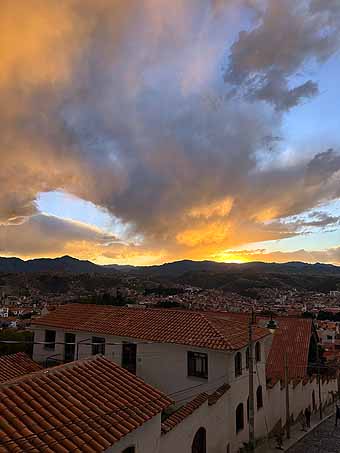
We spent two days here together exploring Bolivian culture and watching the political situation worsen: coups were being organized to overthrow the current government, and more roads were being blocked off. Not wanting to get stuck in one Bolivian city with only three weeks left in South America, I decided to abandon my plans for the beautiful country and leave before I could no longer do so. This involved 28 hours straight of buses and shared taxis, heading back into Chile, getting stuck at borders and waiting on the sides of highways to hitchhike my way to the Peru-Chile border. But I did make it, no worse for wear, and Peru went on to be my favorite South American country. Bolivia is a country I will make every effort to return to; the week I had the privilege of spending there was one of my favorites in South America. The landscapes and culture that the country offers are some of the most unique I have had the pleasure of experiencing. I believe it could earn a spot in my top three countries if I had the chance to backpack it not just briefly but fully. I will return one day to this country that evaded me, and hopefully next time there are no near-death experiences. About the Author
|