 |
|
MADRID LIGHTS UP AT CHRISTMAS |
|||
Story and photos by Brad Hathaway |
|
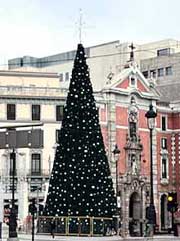
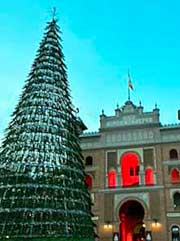
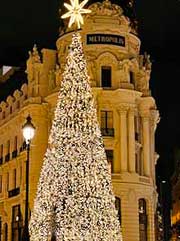
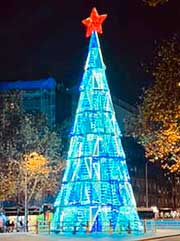
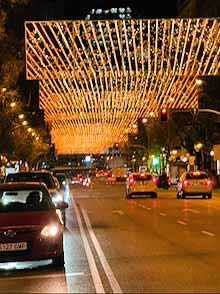
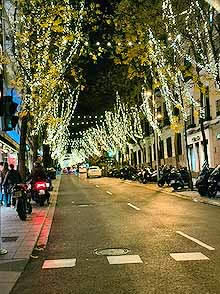
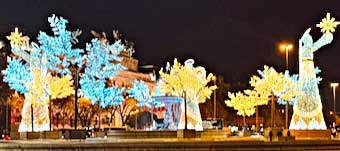
Madrid, the capital of Spain, decks itself out for the Christmas season. Day time and night time, Christmas trees are everywhere.
While your days can be filled with touring by public transit, by Uber or on foot, on at least one night you really must hire a tuk-tuk to take you on a tour of the most spectacular lighting displays. These three-wheeled vehicles are great for tourists in Madrid, and at least from the company we used, are fully electric, zero emission and quiet.
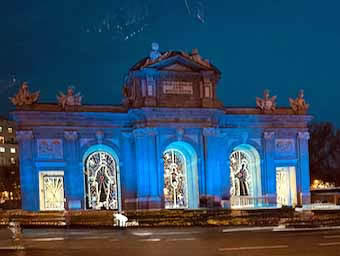
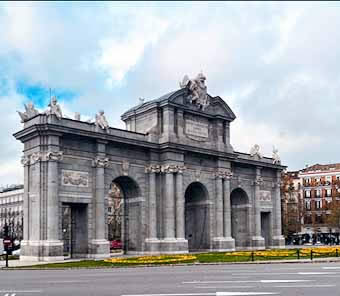
The show you witness will include a modern illumination in the old Alcalá Gate built in 1778 as the eastern gateway to the city. Today, it is the central feature of the Plaza de la Independencia. Its main arched gateways are lit with holiday scenes including the baby Jesus in the middle, flanked by Mary and Joseph.
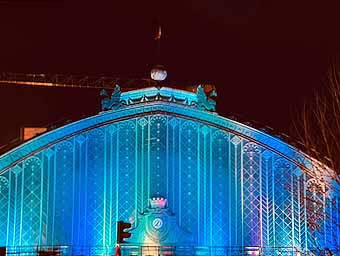
It isn’t just monuments that are illuminated. Entire buildings or facades are lit for the season, including the Atocha Station’s 1892 wrought iron and glass arch. It is the front of a glass train hall which once enclosed the train tracks, but which was converted into an indoor tropical garden when a new terminal was built for the new high-speed trains in 1992.
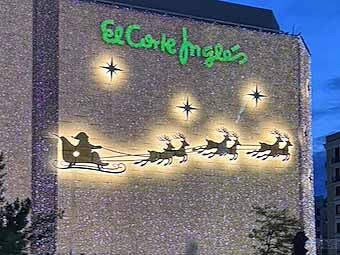
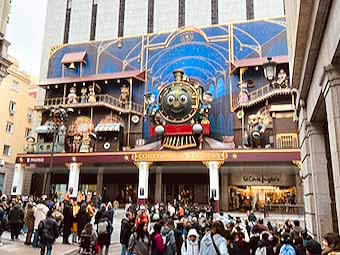
Merchants get into the act, of course. The flagship of the department store chain, El Corte Inglés, presents an entire facade of lights with a Santa Claus and at least six reindeer flying by in silhouette, while its store on Calle Maestro Victoria presents an animatronic musical show. The show is different every year — last year’s show featured a locomotive with animatronic animals as passengers singing Christmas songs. It ran for about fifteen minutes very hour, drawing huge crowds of kids with their parents to the street in front of the building.
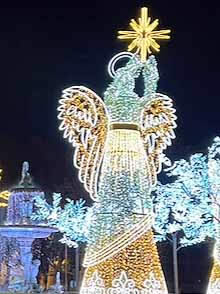
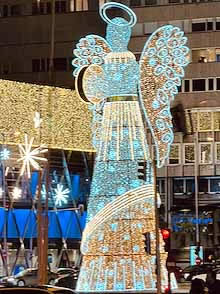
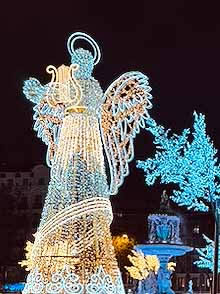
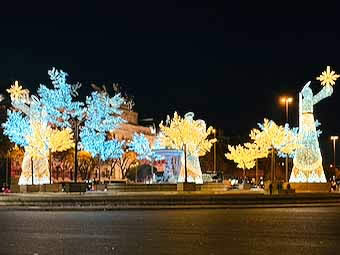
Plazas around the city feature giant statues of lights representing angels.
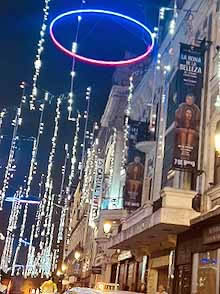
Streets, too, are decked out in dazzling lights.
After a night of seeing the lights, it is time to spend your days seeing the sights. There is much to see in this capital city that dates back to the ninth century when Emir Muhammad I of Córdoba had a fort built here. Today, about six million of the 50 million Spaniards live either in the city or in its larger metropolitan area. Among the sights, you will spot places that look familiar — like the Puerta de Alcala that sits in the circle in front of the entrance to Madrid’s main park, El Retiro. You saw it at night with the infant Jesus flanked by Mary and Joseph. Now, in the daylight it is more a tribute to King Carlos III during whose reign it was constructed.
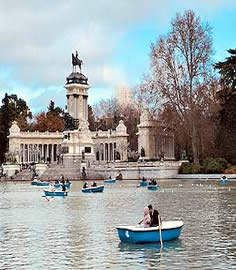
Fronting on the circle where the Puerta stands is the Central Park of Madrid, the three hundred acre El Retiro Park. In addition to seemingly endless paths and walkways, the park includes a large man-made lake where people while away an hour or two rowing rental boats.
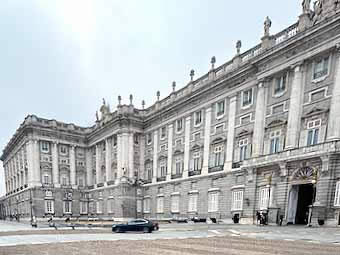
As the capital of Spain, you would expect to find a royal palace. Here it is . . . the Palacio Real de Madrid, the official residence of the Spanish Royal Family, although King Filipe VI and his Queen Letizia don’t actually live here. They have their own residence at Zuarzela outside of town.
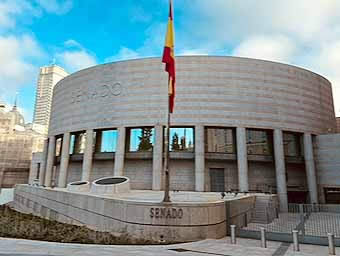
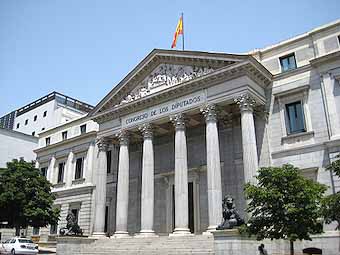
Some nations with a bi-cameral legislature have separate buildings housing each chamber. In this case, the 360-seat lower house, the Congreso de los Diputados or Congress of Deputies, occupies the Palacio de las Cortes near the Paseo del Prado, while the Senado or Senate has its own Palacio del Senado near the Plaza de España. The Senate’s complex features a modern round building attached to the original sixteenth century seminary building that was converted to Senatorial use in 1835 when Spain confiscated religious buildings throughout the country.
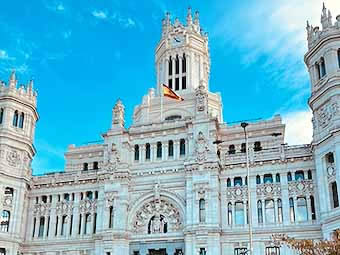
Not to be outdone, the City of Madrid has its own spectacular building to house its city council, the Cibeles. The Cibeles Palace is now the seat of the City Council although it was originally built to be the main post office and telegraph center.
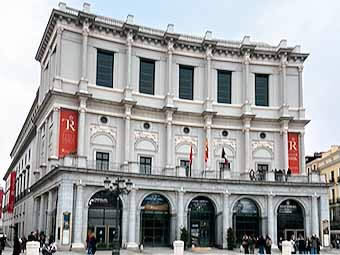
Madrid has a vibrant performing arts scene. Its Teatro Real produces a full season of opera each year. The building also houses performances of both of Spain’s state-funded dance companies, a number of touring peformances, and the Spanish Flamenco Real.
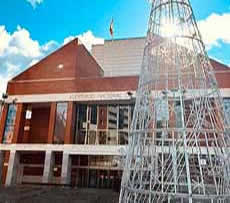
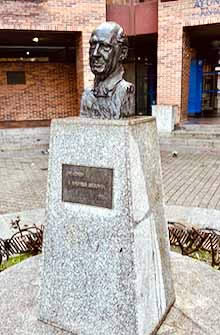
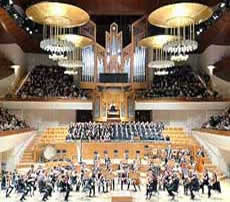
Classical music buffs, however, will probably spend more evenings in the Auditorio Nacional de Música, home of the superb Spanish National Orchestra, the Orquesta Nacional de España. It also hosts some of Europe’s most prominent orchestras in its elegant main hall that seats over 2,300 people in the currently popular vineyard style. The building was designed by chief architect José Maria Garcia de Paredes and an acoustic design team that was lead by Lothar Cremer with sonically satisfying results. It lies adjacent to the Plaza Andrés Segovia, honoring one of Spain’s greatest gifts to the world of music, the classical guitarist who, among other things, taught other noted guitarists including Julian Bream, Christopher Parkening, and John Williams. Being in Madrid at Christmas time, we were fortunate to attend their performance of the dramatic Organ Symphony of French composer Camille Saint-Saëns along with his wonderful Oratorio de Navidad, and Spanish composer Maria de Pablos’ Ave Verum for choir, instrumental ensemble, and organ. The entire concert filled the hall with beautiful sound, giving the huge 5,700 pipe organ a splendid workout with organist Daniel Oyarzabal supporting the full, sometimes radiant, strings along with the vocal work of four noted soloists and the Coro Nacional de España.
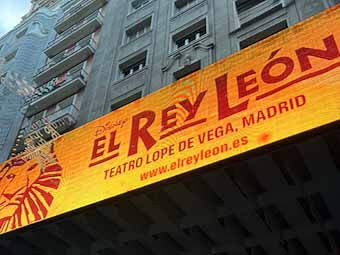
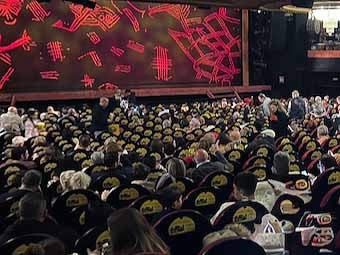
Should your tastes turn more to musicals of the Broadway style, Madrid has lots of that to offer as well. Ever since October of 2011, the reigning champ of Madrid’s version of Broadway has been the Spanish-language staging of The Lion King, known here, as El Rey León. It offers all of the spectacle of Julie Taymor’s staging of the Disney animated hit. The magic of the show on Broadway and around the world has always been the nearly instantaneous awe the audience feels during the opening segment as human puppet elephants parade down the aisles while kite-like birds swing overhead and the shingle-sun rises from the stage. Not a word had to be translated to make all of that work — just a devotion to detail and it certainly gets that devotion here. The awe that the opening inspires ensures enjoyment by kids and adults in spite of the somewhat static painted-sets of the rest of this show as compared with its Broadway original. Nevertheless, this production has had over five thousand performances in the Teatro Lope de Vega on the Gran Via before more than seven million entranced audience members.
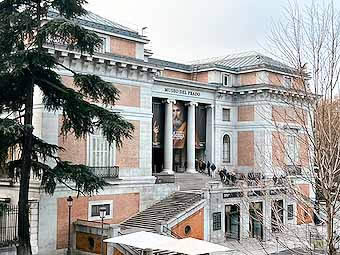
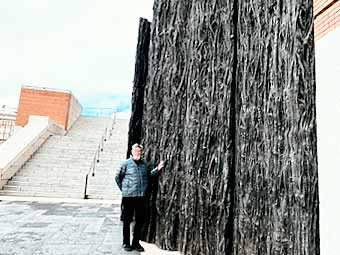
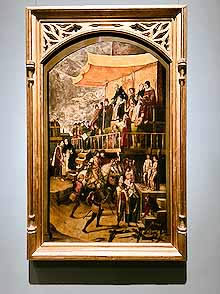
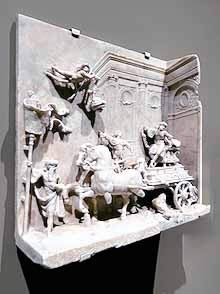
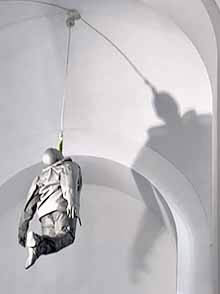
Madrid is also a museum-rich city with specialized and general interest museums small and large.The largest, and most famous, is Museo del Prado with a world-famous collection containing works by many Spaniards including Goya, and many noted non-Spaniard artists such as the Greek - El Greco, Flemish - Rubens, Italian - Titian and Dutch - Bosch. The principal collection is housed in a handsome 18th century building with a modern wedge-shaped entry hall that includes a book store and eatery. It was added along with two new buildings across the street.
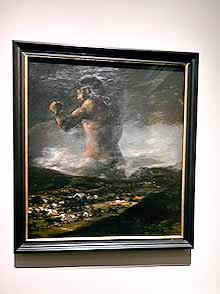
The collection is so large it is hard to pick a few special pieces, but I was struck most emphatically by four: El Coloso —
Auto-da-fe —
El triunfo de Alejandro Magno —
and, Figura colgada.
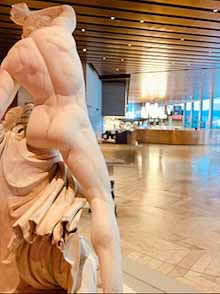
But, one item displayed in the new entry hall seems perhaps the strangest. Sixteenth century sculptors Leone and Pompeo Leoni were tasked with a tribute to Charles V who also served as Charles I of Spain. They devised a system whereby the sculpture could be clad in a suit of armor actually made of metal. But the armor would adorn a nude sculpture. The sculpture is now displayed in the altogether, and is the first thing you see when entering the museum through the new hall. I’m not sure what the king would feel about that but, then, who knows what Washington would have felt about the sculpture of him seated on a throne wearing a toga which was to dominate the U.S. Capitol grounds.
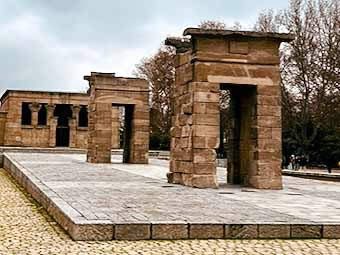
There are many notable buildings throughout the city. One of the most unusual for its location in Europe is the Temple of Debod. The temple is one of the structures that had to be relocated when its original site in Egypt beneath the location of the Aswan Dam that created Lake Nasser in 1970 was to be flooded. The more-than-2,000 year old temple was presented as a gift to Spain in appreciation for support in saving the temples of Abu Sembel.
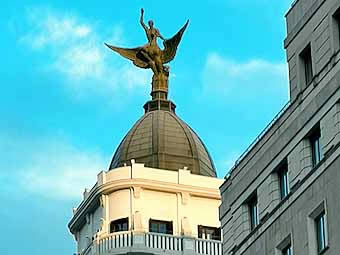
You may be confused as to which Spanish city you are in if you go from the Egyptian Temple of Debod to the Plaza de España where you see the handsome mythological Trojan prince Ganymede atop a slate and metal dome. It seems that similar sculptures can be found in Barcelona and Valencia as they are also the emblem of a Spanish insurance company with offices in many Spanish cities.
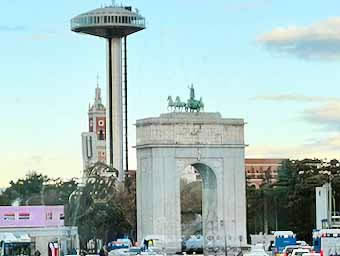
To get a bird’s eye view of the city, you can take the glass elevator of the Faro de Moncloa tower to a viewing platform at 300 feet elevation. Seen in front of the tower here is the triumphal arch Arco de la Victoria built in the 1950s by the fascist regime of dictator Francisco Franco to commemorate a 1936 battle that was crucial to Franco’s success in the Spanish Civil War.
Day or night, in any time of year, Madrid has lots to offer and lots to see. But it is in Christmas time that she shines!
ABOUT THE AUTHOR
|